3 min read
Singapore's Cyber Threat Landscape: Inside the 2025 Data
ThreatBook Research Team
:
March 15, 2026
Inside the Attacks Targeting the World's Highest-Risk Nation for Ransomware
Singapore now holds the unenviable distinction of ranking #1 globally for ransomware risk. Our 2025 Threat Intelligence Report reveals the groups behind the surge, the industries in the crosshairs, and what every organization needs to know.
Highest Global Ransomware Risk Ranking — No Other Nation Exceeds This
Of Singapore Organizations Paid Ransoms Multiple Times in 2025
Reported Hackers Threatening to Report Breaches to Regulators
The Threat Landscape
An Open Economy, an Outsized Target
Singapore's unique geographic position and economic standing have made it a frontline battleground for both regional cybercrime networks and state-sponsored cyber forces. Its advanced manufacturing sector, globally connected financial services, and role as a hub for international conferences combine to make it one of the most attractive — and most attacked — nations in the Asia-Pacific.
In 2025, attack patterns followed a distinct arc: low activity in January and February, then a concentrated surge through July that hit an annual peak. Three forces drove this: the restructuring of the global ransomware ecosystem following law enforcement takedowns of LockBit and ALPHV, rapid exploitation of newly disclosed vulnerabilities, and Singapore's hosting of major regional conferences that drew APT attention to government and critical infrastructure.
"Singapore's ransomware landscape shifted from sporadic incidents to high-frequency, normalized attacks — progressively targeting the core infrastructure of national operations."
Most Severe
Ransomware
Double extortion dominates — encrypting systems while simultaneously threatening data leaks. 50% of Singapore organizations have paid multiple times, trapped in cycles of repeat extortion.
High
Data Theft
Attackers increasingly forgo immediate encryption, instead infiltrating networks for extended periods to harvest intelligence for dark web transactions or state-sponsored operations
High
APT Inflitration
State-linked groups operate with long attack cycles and high stealth, targeting government networks, critical infrastructure, and research institutions for strategic long-term intelligence.
Growing
Phishing
The primary entry point for both ransomware and APT campaigns. Increasingly fused with social engineering tactics aligned to Singapore's critical sectors — finance, government, and technology.
Why Singapore Tops the Global Ransomware Risk Index
Singapore's risk is structural. Manufacturing, technology, and financial services — the pillars of its economy — are exactly the sectors ransomware groups prize most. Attackers exploit Singapore's regulatory environment with particular ruthlessness: 66% of respondents report being threatened with regulatory reporting if they refuse to pay, turning compliance obligations into extortion leverage.
The result is a vicious cycle. With 50% of organizations having paid ransoms multiple times, attackers have learned that Singapore targets reliably yield returns — reinforcing the city-state's position at the top of every criminal group's target list.
APT Groups
The Primary Threat Sources
APT attacks targeting Singapore focus on government networks, critical infrastructure, and research institutions — seeking intelligence with long-term strategic value rather than short-term financial gain.
|
Lazarus |
The most financially destructive APT group active in Singapore. Stole $1.5B in a single supply chain operation — the largest cryptocurrency theft in history. Also linked to the ~$70M breach of Singapore-based crypto exchange in January 2025. |
Finance . Crypto |
|
Mabna Institute |
Focused on academic espionage — credential stuffing and phishing against universities and research institutions. Singapore academic accounts appeared for sale on the dark web in early 2025, indicating active collection operations. |
Academia . Research |
Ransomware Groups
Most Influential Groups Targeting Singapore
Five ransomware groups drove Singapore's threat landscape in 2025, each exploiting the double extortion model — encrypting systems while simultaneously threatening to leak stolen data to amplify pressure on victims.
Qilin
RAAS · Most Active
Singapore's most active ransomware group in 2025. A mature RaaS operation written in Go and Rust with cross-platform capabilities. Uses Cobalt Strike and Mimikatz for lateral movement, AES-256 + RSA-4096 encryption.
Lynx
RAAS · Supply Chain
Most proficient in supply chain penetration with over 270 victims published by May 2025. Struck a luxury goods firm Asia in July, threatening to expose high-net-worth client data.
Akira
RAAS · Multi-Mode Encryption
Linked to former Conti group members. Struck Singapore manufacturing, medical imaging, and blockchain hosting — including a VPN vulnerability attack that destroyed petabytes of diagnostic imaging data.
DireWolf
Most Destructive · Emerging
First identified in early 2025. Targets manufacturing and ICS/SCADA environments — combining Curve25519 key exchange with ChaCha20 encryption and thorough log purging to hinder all forensic recovery.
DevMan
Emerging · Energy Sector
First detected April 2025. Encrypted SCADA data at a major power company, causing an 8-hour dispatch system outage. Completes penetration and extortion operations within hours or days.
Introducing ThreatBook ATI: From Intelligence to Fortified Defense
Cyber attackers aren’t waiting. Every week, new campaigns, zero-days, and adversary tactics emerge. Security teams need more than static feeds. They...
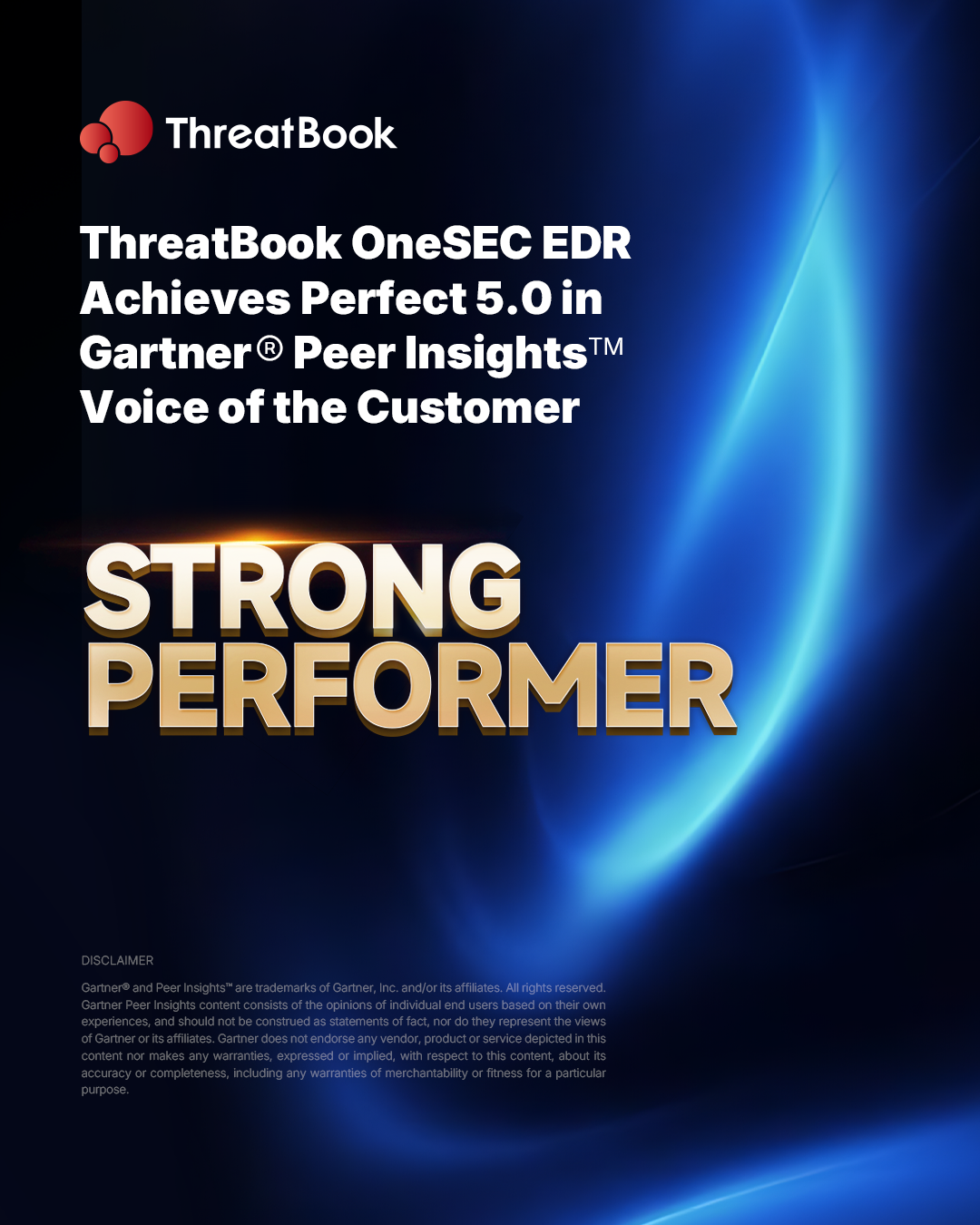
ThreatBook Achieves 5.0 Rating in 20 Overall Responses in Gartner® Voice of the Customer for Endpoint Protection Platforms
We're thrilled to share incredible news: ThreatBook has achieved a full 5.0 out of 5 rating in 20 overall responses in the latest Gartner Peer...